Marshall’s Horse-Property Market: What Buyers Should Expect
May 28, 2026
May 28, 2026
If you are hoping to buy a horse property in Marshall, you may be looking for a sweet spot: true Hunt Country access without Middleburg-level pricing. That is a reasonable goal, but it helps to go in with clear expectations. Marshall does offer more approachable price points and more inventory than some nearby horse-country towns, yet the best equestrian properties still move in a market where supply is limited. Let’s dive in.
Marshall’s broader housing market gives you helpful context before you narrow in on barns, paddocks, and ride-out potential. In April 2026, Marshall had 67 homes for sale, with a median listing price of $724,800, a median sold price of $730,000, and a median price per square foot of $275. Realtor.com also reported a median of 16 days on market and a 98% sale-to-list ratio.
That last number matters. When a well-located rural property checks the right boxes, you should not expect a steep discount just because it is outside the town core or has agricultural features.
For buyers focused on equestrian use, Redfin’s barn-filter snapshot is a useful guide. It showed 10 homes in Marshall with a median listing price of $760,000, which suggests that the horse-property segment exists, but it is not especially deep.
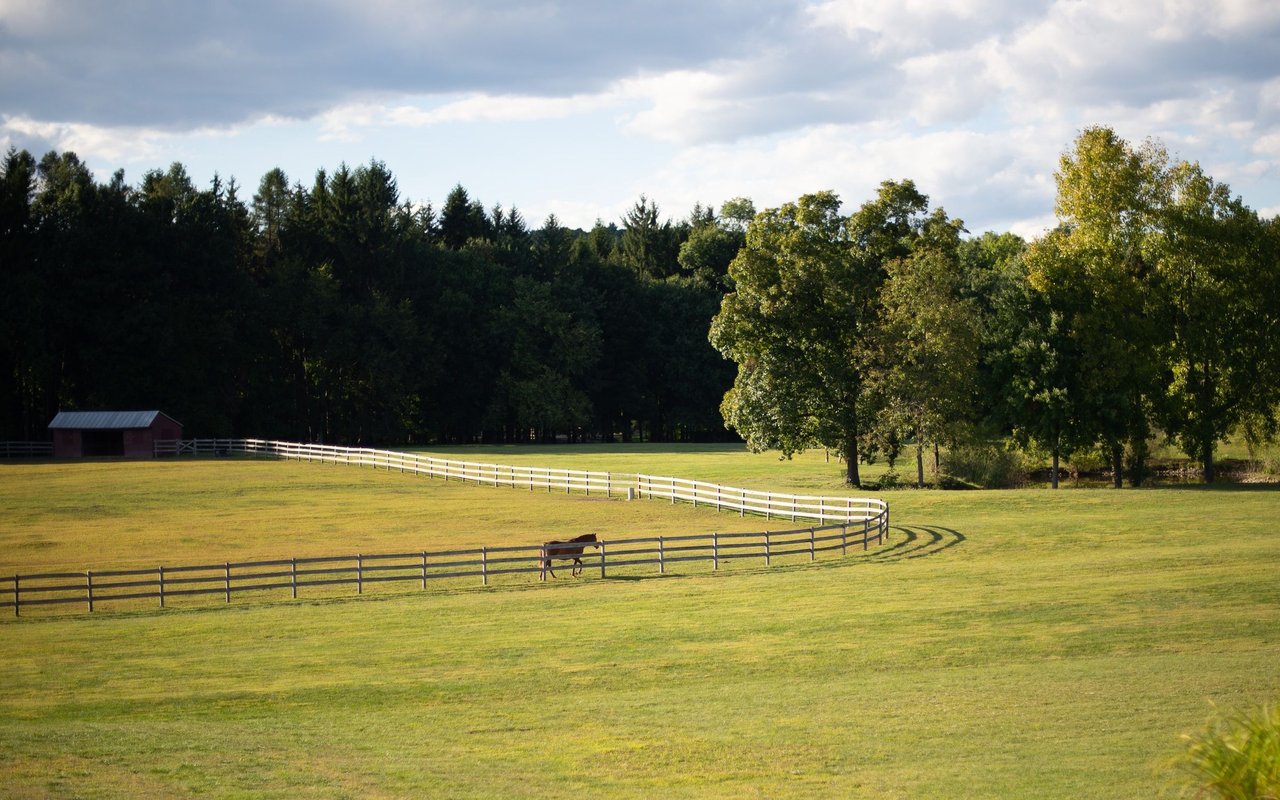
In Marshall, most horse properties are not giant show estates. More often, you will find practical farmettes, rural homes on usable acreage, and mid-size parcels that can support a personal horse setup or a modest operation.
Recent examples show a fairly consistent pattern. Buyers are seeing properties around 5 to 8 acres with features like a three-stall barn, fenced paddocks, a run-in shed, or an arena, along with homes that may be older and updated or newer builds on acreage.
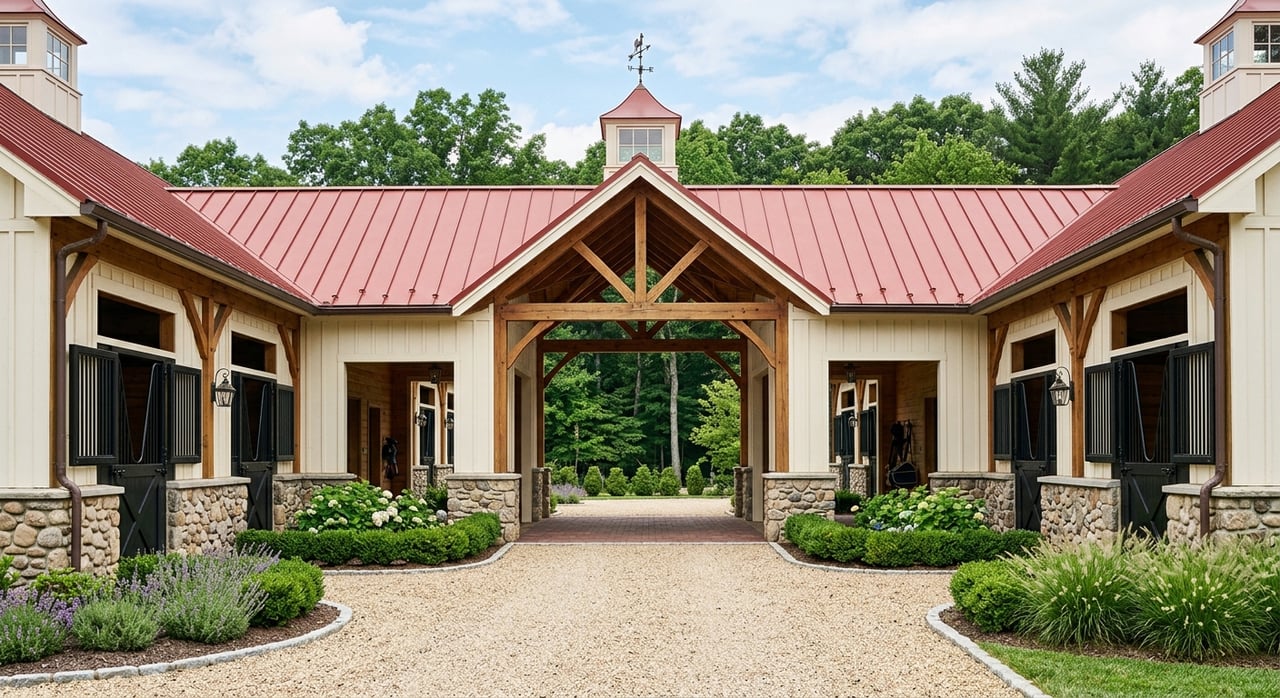
As budgets rise, the facilities improve. Current examples also include 15-acre properties with six-stall barns, office or tack rooms, fenced pastures, and ride-out, as well as a 34-acre property with a five-stall center-aisle barn, grooming space, tack and feed rooms, paddocks, and both indoor and outdoor arenas.
Marshall listings tend to use practical equestrian language rather than luxury-only marketing terms. You will often come across features such as:
That makes Marshall appealing if you value function and land utility. It may be less ideal if you are expecting a large inventory of polished, turnkey competition facilities.
Your buying power in Marshall depends heavily on how much acreage you need and whether you want existing horse infrastructure in place. In general, the market starts with usable country properties and becomes more turnkey as you move up in price.
In this range, you should expect a country-living property with some horse utility, not a fully built-out equestrian estate. Many options are likely to be on roughly 5 to 8 acres, with a smaller barn, a basic arena, or a former horse setup that may need updates.
This can still be a strong entry point if your goals are modest. If you want room for a few horses, flexible outbuildings, and a manageable amount of land, Marshall may offer more practical options here than nearby premium markets.
This is where Marshall begins to offer more credible horse-property functionality. Buyers in this bracket may find 15-acre parcels, fenced pastures, six-stall barns, and direct ride-out features that feel more purpose-built for equestrian use.
If your priority is a property that works well from day one, this range may be worth watching closely. Inventory is still limited, but the mix of land and infrastructure becomes more compelling.
This is the range where Marshall can begin to feel more turnkey. Buyers should expect larger acreages and stronger facilities, especially if they want a true farm feel with more complete barn and arena setups.
Examples in this category include properties with center-aisle barns, indoor and outdoor arenas, paddocks, and dedicated grooming or feed areas. For many buyers, this is the bracket where Marshall starts to compete more directly with the broader Hunt Country lifestyle, while often remaining below Middleburg pricing.
At the top end, Marshall tends to shift into legacy-scale or highly specialized properties. This is not the deepest luxury inventory pool in Hunt Country, but buyers may encounter larger, more distinctive assets when they come to market.
If you are shopping at this level, it is helpful to compare Marshall with nearby towns as part of a broader search strategy. That is because some of the largest and most specialized equestrian estates are more commonly found in neighboring submarkets.
Marshall often appeals to buyers who want to stay in the Hunt Country orbit while preserving more budget for land, improvements, or future upgrades. Compared with nearby towns, that value proposition is one of its biggest strengths.
Middleburg remains the premium benchmark. In April 2026, Realtor.com showed 30 homes for sale there, with a median listing price of $2.7 million and median days on market of 105.
That pricing difference is significant. If Middleburg is your ideal location but your budget does not comfortably reach its core horse-property market, Marshall may offer a more accessible path into the region.
The Plains sits below Middleburg in price, but it still leans premium. Realtor.com’s current page showed 10 homes for sale, a median listing price of $945,000, and median days on market of 29.
For buyers, that means Marshall can still look comparatively approachable. Depending on the listing, you may find similar rural character with more room in the budget for upgrades or additional land utility.
Upperville is much thinner on supply. Realtor.com showed only 3 homes on the market, ranging from a 1-acre listing at $598,000 to a 365.6-acre contingent estate at $11.2 million.
That wide spread tells you something important. Upperville can be highly polarized, with very little inventory in between, while Marshall may offer a steadier stream of practical horse-property opportunities.
Buying rural property is different from buying a standard house with a fenced backyard. In Marshall, the land, layout, and local rules matter just as much as the home itself.
Fauquier County requires zoning approval before any new structure is built, including agricultural buildings. If you are thinking about adding a barn, building an arena, or doing major site work, those questions should come up early, not after closing.
The county’s Agricultural and Forestal District program generally requires 25 acres or more, with limited exceptions for properties between 5 and 25 acres. That program may affect subdivision options and may also relate to special land-use assessment, so it is worth understanding how a property is classified before you move forward.
Marshall-area buyers should also watch for conservation easements and purchase-of-development-rights programs. These can limit future development or subdivision, even when the property otherwise looks attractive for horse use.
Before you commit to a horse property in Marshall, make sure you confirm:
These details can have a direct effect on value, usability, and future plans. They are also the kinds of issues that can separate a property that looks good online from one that actually works in real life.
Marshall is one of the more approachable entry points into the broader Hunt Country horse-property market. You can find more inventory and lower prices than in Middleburg or Upperville, and that makes the area appealing for buyers who want land and equestrian utility without reaching immediately into the highest price tiers.
At the same time, this is not an unlimited market full of turnkey farms. Inventory remains limited, many properties are more practical than polished, and strong listings can still attract quick attention.
If you are buying in Marshall, the smartest approach is to stay flexible on cosmetic details while being disciplined about land use, infrastructure, and county-level due diligence. When those pieces line up, Marshall can offer real long-term value in a deeply horse-centered part of Fauquier County.
If you are considering a horse property in Marshall or anywhere in Hunt Country, Debbie Meighan can help you evaluate acreage, facilities, and the local factors that shape long-term value with the care and discretion these properties deserve.


Debbie's mission is to connect qualified buyers and motivated sellers to cement the best real estate transactions, deals where both sides come together for a common goal, and everyone feels like they have walked away a winner.