Buying Land in Culpeper County VA for a Working Farm
July 2, 2026
July 2, 2026
Wondering whether a beautiful stretch of raw land in Culpeper County can actually become a productive farm or horse property? That question matters more than most buyers expect, because the difference between promising acreage and a workable farm often comes down to zoning, access, utilities, soils, and timing. If you are looking at land with a long-term vision in mind, this guide will help you understand what to verify before you buy and how a smart plan can turn raw acreage into a functioning agricultural property. Let’s dive in.
Culpeper County remains deeply tied to agriculture in both land use and county policy. County planning materials cite 682 farms covering 124,390 acres, with 97% identified as family farms. The county also reports that 137,533.07 acres of agriculture and forestland are enrolled in land-use taxation, which equals 55.8% of all land in the county.
That local context matters if you are buying with a farm, equestrian, or agricultural business plan in mind. In Culpeper, agriculture is not a fringe use. It is a well-established part of the county’s land base, review process, and tax structure.
Before you price fencing, barns, or pasture seed, confirm the parcel’s zoning and ask parcel-specific questions early. Culpeper County Planning and Zoning administers zoning permits, conditional use permits, site plan and subdivision review, rezonings, and comprehensive-plan amendments. That makes the department one of your first and most useful stops.
Two districts often shape rural land decisions in Culpeper County: A-1 Agricultural and RA Rural Area. Each can support rural uses, but the details affect what you may build, how the parcel may be divided, and how your long-term plan can unfold.
In the A-1 Agricultural District, the county code lists agriculture, agritourism, and commercial stables, equine boarding facilities, and equestrian centers as permitted principal uses. The equestrian uses are subject to VDOT entrance-permit approval, which is an important access issue for buyers planning a more active horse property.
The minimum lot area for permitted principal uses in A-1 is 5 acres. A family-division lot may be 1 acre, and dedicated well lots may have no minimum lot area if Virginia Department of Health and county water and wastewater standards are met.
Subdivision potential is also limited. In A-1, subdivision is limited to minor divisions, and qualifying parent parcels may be divided into two parcels plus a residual no more than once every five years.
In the RA Rural Area District, the minimum lot area for permitted principal uses is 3 acres. Family-division lots may be 1 acre, and dedicated well lots may have no minimum lot area if Virginia Department of Health requirements are met.
Like A-1, RA subdivision is limited to minor divisions. Qualifying parent parcels may be divided into two parcels plus a residual no more frequently than once every five years.
If you are buying raw acreage, zoning affects more than whether you can build a house. It shapes your access plan, your future barn or stable layout, your ability to create additional lots, and whether your vision fits the county’s permitted uses without extra review.
This is especially important for buyers considering a phased approach. You may plan to start with land, then add a residence, then fencing, paddocks, or a public-facing agricultural use later. That sequence only works well when the zoning supports the full picture.
Agricultural and Forestal Districts are separate from zoning. Culpeper County treats them as a voluntary program, not as a zoning district. Each district runs on an eight-year cycle and must have a 200-acre core made up of one or more contiguous parcels.
This distinction matters because a parcel may have zoning that allows agricultural use while also being affected by nearby Agricultural and Forestal District considerations. The county notes that adjacent land-use applications must take district impacts into account and may trigger buffers or other protection measures.
If a parcel is already in land-use taxation or sits next to an Agricultural and Forestal District, that can influence your carrying costs, review path, and future plans. It is worth confirming early rather than discovering it later in due diligence.
Raw acreage often looks simple on a listing map, but the county review process treats it as a real site-planning exercise. Culpeper’s minor-division guide says staff evaluate zoning, minimum lot size, road frontage, time since the last division, duration of ownership, soils, topography, floodplain, utility availability, and nearby Agricultural and Forestal Districts.
In practical terms, that means you should evaluate the land from both a farming standpoint and a buildability standpoint. Open ground alone does not tell you whether the parcel will support the improvements you have in mind.
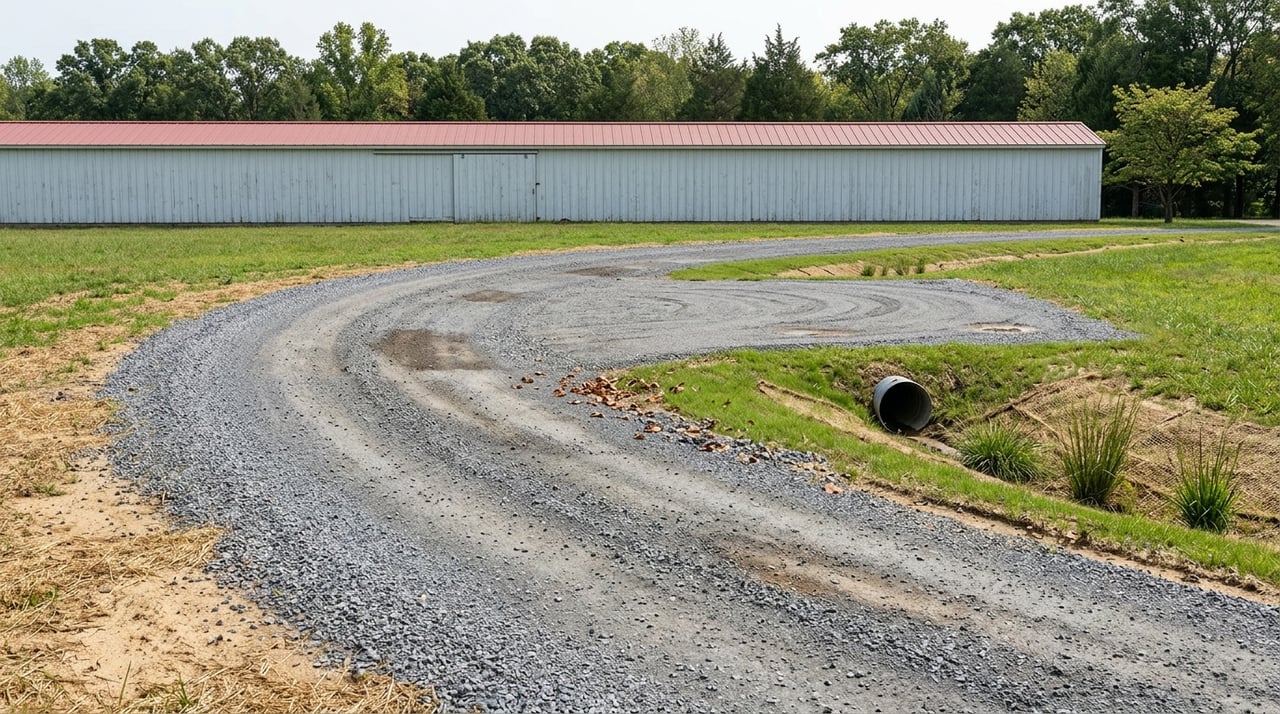
Access is one of the first issues to verify. Culpeper’s zoning-permit checklist says new primary structures need a VDOT entrance permit, or a letter stating that one is not required.
For equestrian buyers, this is especially relevant when traffic patterns, trailers, deliveries, or boarding activity may become part of the property’s day-to-day use. A parcel that works on paper still needs workable and approved access on the ground.
If the land is not already served by public utilities, do not assume the most convenient homesite will support a well and septic system. Culpeper’s building page notes that a zoning permit must come before a building permit, and new connections to well and septic systems may require a Virginia Health Department permit.
Virginia’s private-well program starts with a construction-permit application through the local health department. Virginia’s onsite-sewage program likewise issues permits for onsite septic systems. On raw acreage, well and septic feasibility should be confirmed before you finalize your plan for a dwelling, barn support facilities, or future improvements.
Sketch plans and preliminary plats in Culpeper should show access easements, structures, special features, floodplain, and proposed well and drainfield locations. This is a good reminder that not every attractive field is ready for immediate use or construction.
You should also understand disturbance thresholds. Culpeper County says a land-disturbance permit is required when 10,000 square feet or more of land will be disturbed. That can become relevant sooner than buyers expect when they begin clearing, grading, driveway work, or preparing building sites.
Many buyers imagine raw land becoming a finished farm quickly. In reality, the strongest properties are often built in careful stages. That is particularly true for horse properties, where pasture quality, water, fencing, and grazing management all work together.
Virginia Tech guidance points to a practical order of operations. Soil testing comes first, because it is the only accurate way to predict lime and fertilizer needs in forage. That means your first serious improvement decision should usually be based on test results, not guesswork.
If your goal is pasture, hay ground, or productive forage, start with soil testing. It gives you a factual baseline and helps you avoid wasting money on seed, lime, or fertilizer that may not match the site’s needs.
Virginia Tech also notes that no-till seeding helps keep soil in place because tillage increases erosion risk during establishment. On raw acreage, protecting the site while you improve it is often just as important as getting grass started.
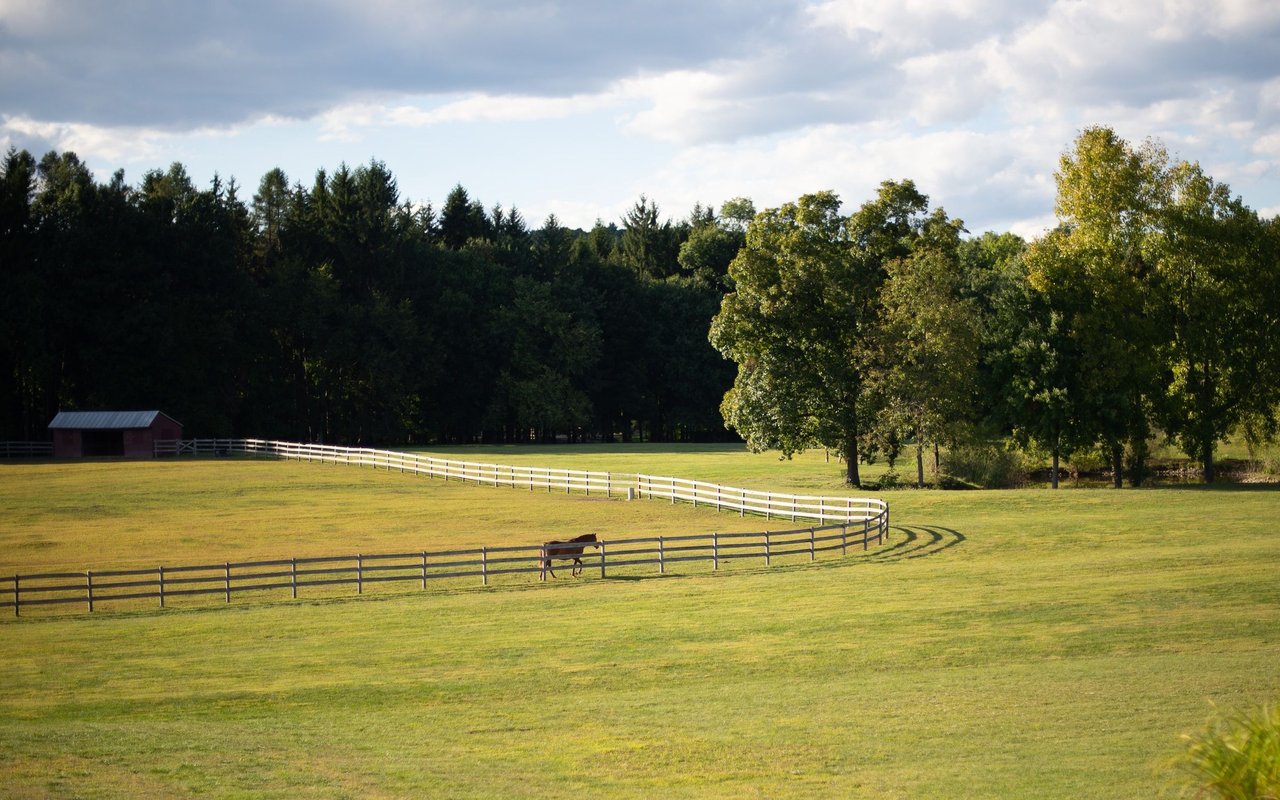
A working farm depends on practical infrastructure. Virginia Tech’s rotational-grazing guidance says managed grazing relies on fencing and watering systems, and more paddocks can improve pasture recovery and productivity.
That is why many successful farm setups begin with perimeter access and water planning, then move to subdivision fencing and paddock layout. Temporary electric fencing can also help you adapt the setup as the land improves.
New forage is not ready overnight. Virginia Cooperative Extension says new forage stands may take 18 to 24 months to establish. During that period, they should not be grazed closer than 4 to 6 inches.
For horse owners, patience matters. Using new pasture too heavily too soon can set back the entire property plan and invite erosion, weed pressure, and uneven forage growth.
Continuous grazing can wear out a property faster than many new owners realize. Virginia Cooperative Extension recommends rotating and resting acreage rather than grazing it continuously.
The same publication notes that in Virginia, 2 to 3 acres of well-managed pasture can support a mature horse, though careful management can sometimes work on less acreage. The key phrase is well-managed. Productivity depends on pasture health, rest periods, water access, and fencing strategy, not just the total number of acres.
If your long-term plan includes agritourism or another public-facing farm use, do not assume it will be treated the same as a private agricultural operation. Culpeper’s permits page includes an Agritourism Determination/Declaration application, which shows the county expects these uses to be defined early.
That is also useful for buyers who may later consider boarding, events, farm retail, or another farm-based business. Culpeper County states that it does not require a business license, but Planning and Zoning should still be consulted before starting any business in the county.
When you are evaluating raw acreage in Culpeper County, keep your checklist focused on what the county actually reviews and what the land will need to function well.
Buying rural land is not the same as buying a finished home. You are evaluating a future system, not just a current property. The best purchase decisions come from matching the parcel’s zoning, physical conditions, and infrastructure potential with the way you actually plan to use the land.
That is where practical, on-the-ground guidance can add real value. For buyers looking at farms, horse properties, or strategic land in Northern Virginia, a careful approach can help you avoid expensive assumptions and move toward a property that works as beautifully in practice as it does on paper.
If you are considering raw acreage in Culpeper County and want thoughtful guidance on land, equestrian potential, and the realities behind a rural purchase, connect with Debbie Meighan for a confidential consultation.


Debbie's mission is to connect qualified buyers and motivated sellers to cement the best real estate transactions, deals where both sides come together for a common goal, and everyone feels like they have walked away a winner.