How To Choose A Small Farm On The Edge Of Leesburg
June 25, 2026
June 25, 2026
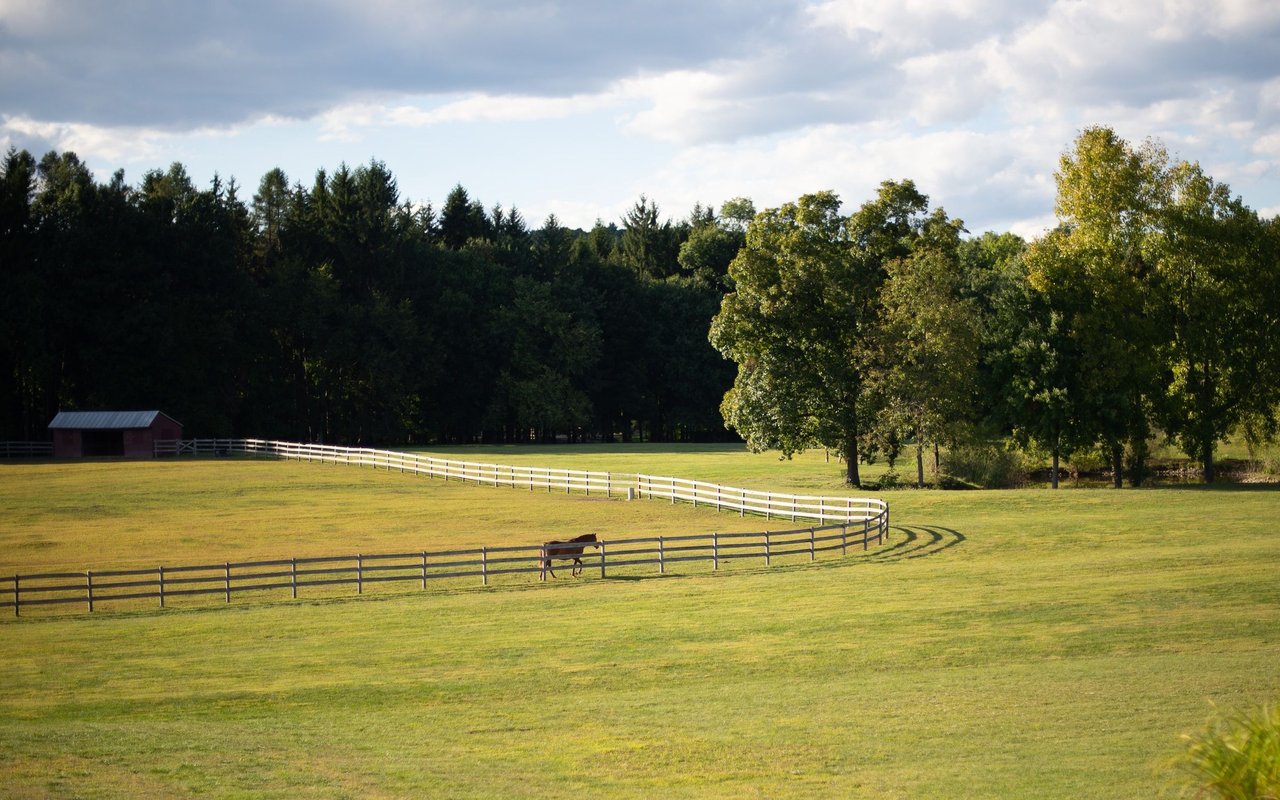
Looking for a small farm near Leesburg can feel exciting right up until the details get complicated. A property may have beautiful pasture, a charming barn, and just enough acreage, but the real question is whether it fits how you want to live and use the land. If you want a place for horses, hobbies, or a quiet rural lifestyle close to town, a careful review can save you time, money, and frustration. Let’s dive in.
When you shop for a small farm on the edge of Leesburg, the first step is not the view from the driveway. It is understanding which jurisdiction controls the property and what that means for use. Land inside the Town of Leesburg follows the town’s zoning ordinance, while land outside the town in unincorporated areas follows Loudoun County zoning.
That difference matters because zoning, easements, HOA covenants, and proffer statements can all affect what you can do with a parcel. Before you fall in love with a property, review the parcel-specific information in Loudoun County’s GIS and LandMARC tools. A farm that looks flexible on the surface may have limits that are not obvious during a showing.
It is easy to assume that more acreage means more options, but that is not always true. Loudoun County notes that in the AR-1 district, a minimum 20-acre tract is needed to subdivide. That means a five-acre or 10-acre property may work well as a horse or hobby farm, but it should not automatically be viewed as future subdivision land.
This is one of the most important mindset shifts for buyers near Leesburg. You are not just buying open space. You are buying a specific set of legal rights, restrictions, and practical possibilities.
Many rural properties near Leesburg come with layers that can shape ownership in a big way. Conservation easements, Agricultural and Forestal District enrollment, and land use assessment programs can affect both how the land is managed and what your ongoing costs may look like. In Loudoun County, more than 85,000 acres are protected by conservation easements, and more than 40,000 acres are enrolled in 21 Agricultural and Forestal Districts.
The Land Use Assessment Program may also defer some real estate taxes on agricultural, horticultural, forestry, or open-space land if the property remains eligible. That can be a meaningful benefit, but it is tied to continued qualification. If you are comparing two similar properties, this is a key part of the ownership picture.
A preserved farm can be very appealing if you value open land, stewardship, and long-term rural character. At the same time, preservation-minded restrictions can limit future changes. If your goal is a straightforward country retreat, that may be a benefit. If your plan involves adding uses or changing the property over time, you will want to understand those limits early.
A small farm near Leesburg should be judged from the ground up. Loudoun County advises buyers to use WebLogis to check whether a parcel falls within floodplain, mountainside, limestone, sensitive soils, or steep-slope overlays. These conditions can affect development standards, insurance needs, review timelines, and long-term maintenance.
For example, floodplain areas can trigger flood insurance requirements. Mountainside and steep-slope areas carry additional development standards. North of Leesburg and west of Catoctin Mountain, the Limestone Overlay District may bring karst risks such as sinkholes and groundwater pollution concerns.
If you want a true working small farm, the quality of the land matters just as much as the square footage of the house. Loudoun County maps prime farmland soils in its GIS system, and recent zoning changes were designed to help preserve those soils and support rural economy uses in western Loudoun.
For buyers, this means the best parcel is not always the one with the prettiest approach. A property with practical soils, usable pasture, and fewer environmental constraints may serve you better than one with dramatic terrain that is harder to improve.
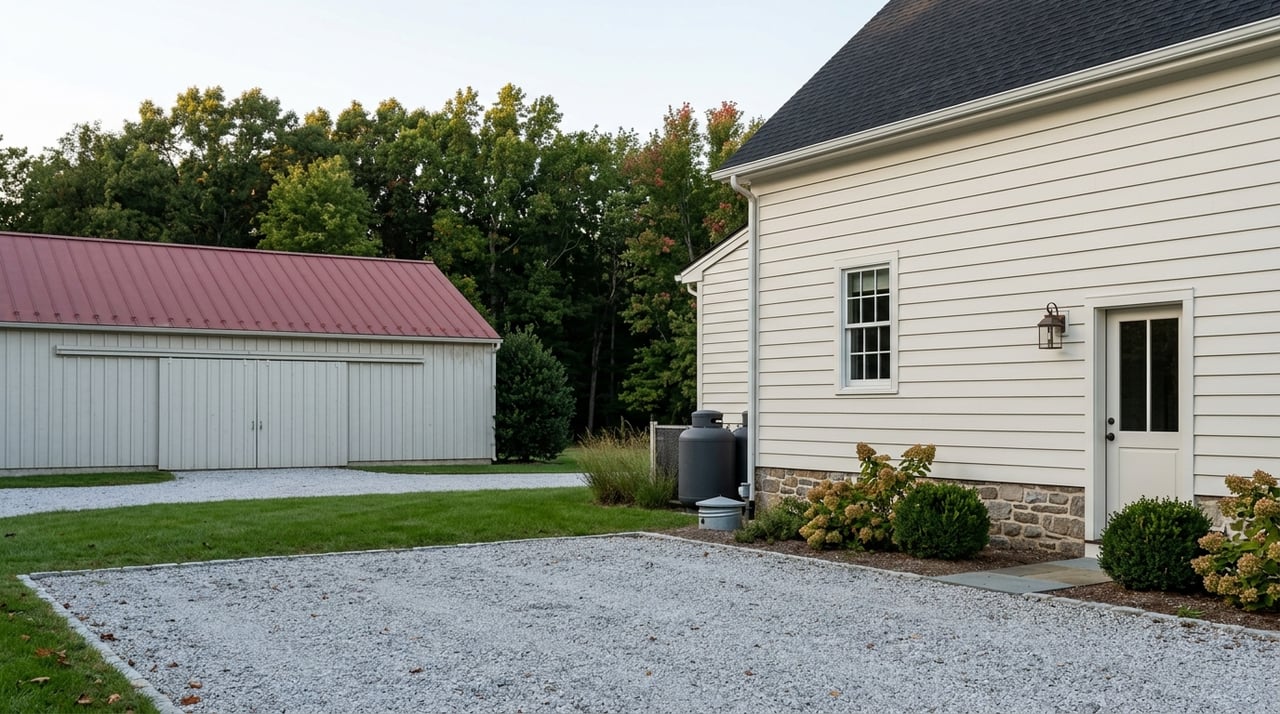
Utilities often separate a manageable rural property from a costly project. On the edge of Leesburg, some properties may have access to town or Loudoun Water service, while many rural properties rely on private wells and onsite wastewater systems. Loudoun County requires a health permit before drilling a well or installing or modifying septic, and well water must be tested after drilling.
If you plan to keep animals, expand outbuildings, or simply update the property over time, utility questions should be answered early. A beautiful barn setup can lose its appeal quickly if the well, septic, or service limits do not support your plans.
Some day-to-day details are easy to overlook during a first visit. Loudoun County does not provide curbside trash or recycling pickup, and some rural areas rely on wireless or satellite internet that can be inconsistent. Electricity is provided by Dominion or NOVEC, depending on the property.
Before you commit, confirm how the property handles internet, trash, and basic service needs. If you work from home, stream heavily, or expect a hybrid schedule, these details deserve the same attention as the kitchen or primary suite.
One reason buyers look on the edge of Leesburg is the balance between country space and town convenience. That balance only works if the commute feels realistic for your week-to-week life. Route 7 is a major regional connection, and in the study area it carries average traffic counts between 121,000 and 142,000 vehicles per day.
The Route 15 Bypass interchange area in Leesburg averages about 52,000 vehicles per day and already sees heavy peak congestion. Loudoun is also studying cut-through traffic on roads parallel to Route 15, and corridor projects are underway, so traffic patterns can shift over time. A map is helpful, but a test drive during peak hours is better.
Loudoun County Transit offers commuter bus service to Washington, D.C., Rosslyn, the Pentagon, and Crystal City. The county also provides fare-free local bus service, park-and-ride lots, and Transit On Demand in Leesburg for same-day or advance bookings.
That can make some edge-of-Leesburg properties more workable for hybrid commuters. Still, transit is schedule-based and location-specific, so it is smart to test whether it matches your actual routine.
Not every small farm supports every kind of rural lifestyle. If you want horses, a few livestock animals, or a serious hobby farm setup, the property should be evaluated for that specific use. Loudoun County requires a Conservation Farm Plan for certain uses, including Farm Market or Animal Husbandry, on parcels under 5 acres.
That plan is based on carrying capacity and best management practices. In simple terms, the county is looking at whether the land can reasonably support the intended activity. For buyers, this is a reminder to match your vision to the land itself, not just to a listing description.
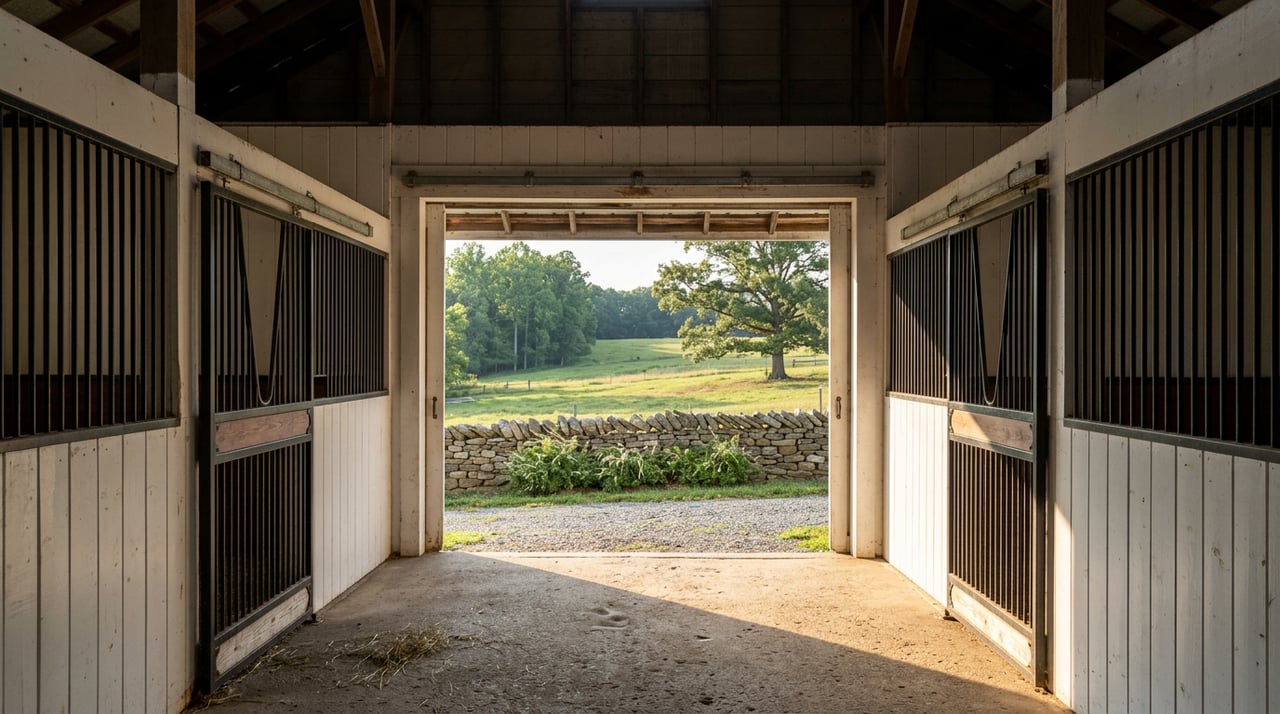
A functional horse or hobby property depends on more than one nice outbuilding. You will want to consider usable pasture, layout, access, utility support, and how the day-to-day flow will work. The right property should make your routine easier, not create new obstacles every season.
This is where practical, on-the-ground review matters. A parcel can look perfect in photos and still fall short when it comes to carrying capacity, access, or improvement limits.
One of the biggest advantages of the Leesburg edge is access to town amenities without giving up a more rural setting. The Town of Leesburg says its park system covers roughly 400 acres, and Ida Lee Park includes a large recreation center, tennis complex, and outdoor aquatic center. For many buyers, that mix of open space and nearby amenities is exactly the point.
Leesburg Executive Airport is also town-owned and is one of Virginia’s busiest general aviation airports. Nearby buyers should check whether a property is affected by the Airport Impact Overlay District around Leesburg Executive Airport or Dulles. If you are expecting a very quiet setting, that review matters.
The best small farm on the edge of Leesburg is rarely the one that simply looks the most charming. It is the one that fits your intended use, your commute, your utility needs, and the legal realities of the parcel. When you take time to check zoning, overlays, soils, utilities, and access, you give yourself a much stronger foundation for a confident purchase.
If you are considering a farm, horse property, or country estate near Leesburg, it helps to work with someone who understands both the lifestyle and the land. For tailored guidance on rural and equestrian property in Loudoun County, schedule a confidential consultation with Debbie Meighan.


Debbie's mission is to connect qualified buyers and motivated sellers to cement the best real estate transactions, deals where both sides come together for a common goal, and everyone feels like they have walked away a winner.