Loudoun Is Making It Easier to Build Bigger Stables. Your Well Didn't Get a Vote.
September 24, 2026
September 24, 2026
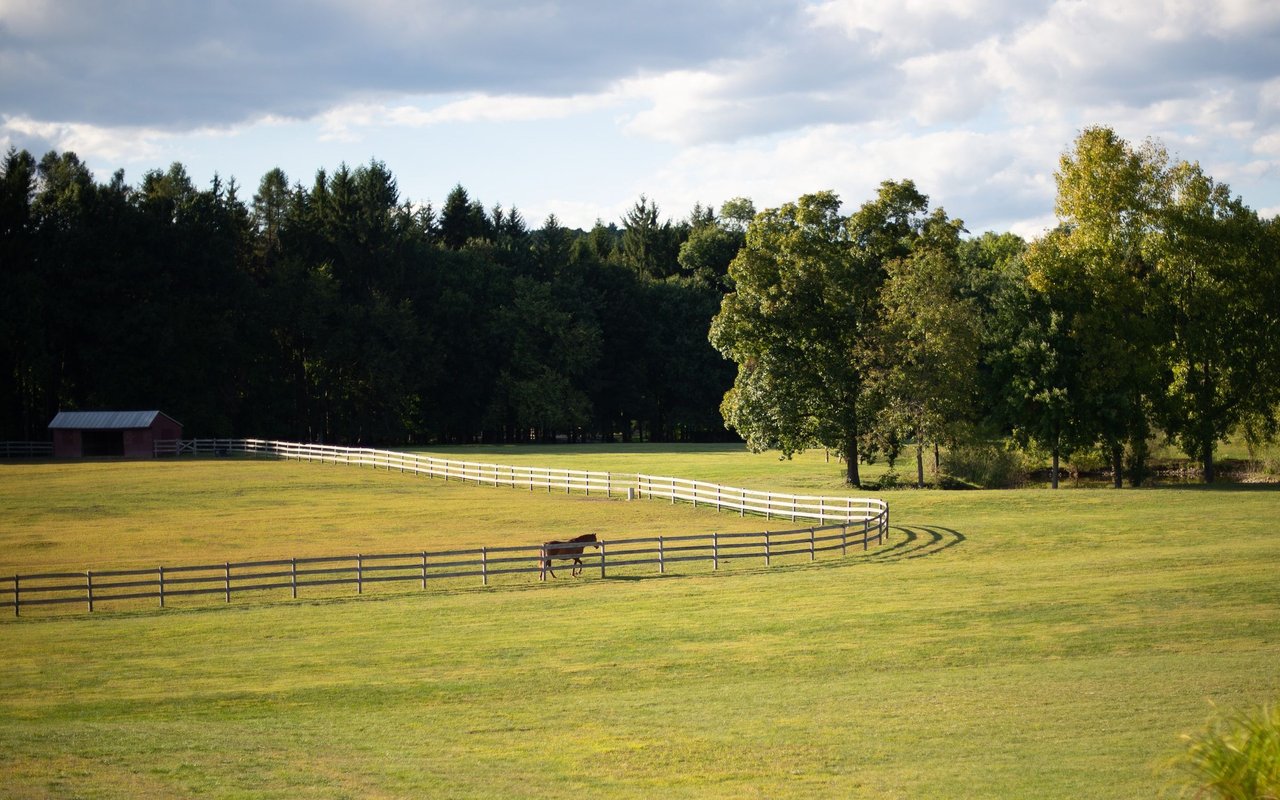
If you've watched Loudoun County's zoning rewrite from a distance, the western Loudoun changes probably read as good news for horse people. Stable setbacks are shrinking. Equestrian activity is being folded into routine agricultural use instead of sitting in its own regulatory box. On paper, it's about to get easier to keep and house horses on rural land west of Leesburg.
At the same time, a coalition of the county's own preservation groups is telling anyone who will listen that the ground beneath those same farms is running short on water. Two conversations, happening on entirely separate tracks, both landing on the same acreage. For anyone buying, selling, or expanding a horse farm in western Loudoun this fall, the gap between them is the actual story.
The project has a formal name, CPAM-2024-0002 and ZOAM-2024-0002, known around the county as the Western Loudoun Rural Uses and Standards rewrite. It grew out of the 2023 Zoning Ordinance update, which left several rural-specific questions unresolved. County staff are now drafting the language, and Loudoun County will host public open houses on September 28 and September 30, 2026 to gather feedback before that draft heads to the Planning Commission.
Among the recommendations the Board's Transportation and Land Use Committee has already advanced:
| Current standard | Draft recommendation | |
|---|---|---|
| Stable setback from a neighboring home | 60 to 120 feet, depending on stable type | A flat 60 feet |
| Hours of operation | No uniform standard | 7 a.m. to 11 p.m., with horse care, grooming, and cleaning exempt at any hour |
| Regulatory treatment | Equestrian use regulated as its own agricultural category | Folded into standard agricultural use, per committee direction |
The revised schedule, adjusted this summer to avoid overlapping with the 2027 election cycle, has a nine-member ad hoc committee, five from the Zoning Ordinance Committee and four from the Planning Commission, reviewing draft language through November 2026. That committee includes people whose names will be familiar if you've spent any time in Loudoun's horse and wine country: Stacey Metcalfe, executive director of Morven Park, sits on it alongside Bill Hatch of the Loudoun Wineries & Winegrowers Association, Beth Erickson of Visit Loudoun, and Tia Earman of the Piedmont Environmental Council. Planning Commission hearings are expected to run from January through March 2027, with the Board of Supervisors targeting final adoption by July 2027.
None of that is finalized. But the direction is clear enough that anyone with a stable on the property, or plans for one, should be paying attention now, while the comment window is still open.
Loudoun's Preservation and Conservation Coalition, a group of more than 50 local organizations including Loudoun Watershed Watch, Loudoun's Future, and the Piedmont Environmental Council, released a groundwater assessment this year with a number that's hard to unsee once you know it.
The number of wells in western Loudoun grew from roughly 6,000 in 1980 to about 19,000 today. The aquifer feeding them did not get any bigger in the same stretch of time.
The study was authored by three long-time western Loudoun residents: John Adams of the Loudoun Farm Bureau, who has operated Rock Croft Farm for 50 years, hydrogeologist David Ward, and water resources engineer Andrew Stoddard. Their conclusion was direct enough that the coalition is now asking the county to advocate with the Virginia Department of Environmental Quality for a formal Groundwater Management Area covering western Loudoun, a designation that would bring state-level oversight to a resource the county has historically managed on its own.
This isn't a drought-year blip. It's a multi-decade trend, and it shows up in places you wouldn't expect to be affected by residential well demand at all.
If the coalition's study feels abstract, a recent test in Purcellville makes it concrete. Planners studying a proposed western Loudoun recreation complex ran a 27-day continuous pumping test on three on-site wells between late December 2025 and January 2026, during severe drought conditions. The wells were drawn at just over 36,000 gallons per day, more than double the facility's projected daily need of 15,000 gallons.
Twenty-one neighboring residential wells, ranging from about 150 to 600 feet deep, were monitored during the test. Most showed drawdowns of only a foot or two. One well, sitting directly south of the site, dropped 13 feet. At a subsequent Planning Commission session, At-Large Commissioner Dale Polen Myers raised a pointed question about whether the numbers would hold at peak demand, noting that two of the three domestic wells on site yield only about 5 gallons per minute.
That's not a horse farm well. But it's the same geology, the same drought conditions, and the same basic physics that govern every private well in western Loudoun, including the one that fills your wash rack and waters your paddocks.
Here is the part that doesn't show up in either conversation on its own. The zoning rewrite is expanding what a property owner is permitted to build closer to the property line, with less regulatory friction, on a shorter timeline than it used to take. The groundwater picture is telling that same owner that the resource required to actually operate a bigger equestrian footprint, water for stalls, wash areas, guest quarters, multiple bathrooms, is under documented, multi-decade strain in the exact same geography.
Permission and capacity are two different constraints, and they don't move together just because they both apply to the same acre. A shrinking setback tells you what the county will let you build. It tells you nothing about whether the well on that parcel can supply it. For a buyer evaluating a farm with expansion in mind, or a seller marketing one on the strength of "room to grow," the well is the ceiling now, not the zoning envelope. That's the reversal worth sitting with before you write or accept an offer this fall.
Given where both of these stories stand right now, a practical due diligence sequence looks like this:
Does the setback change apply to stables that already exist under the current rules? The draft language addresses new construction and modifications going forward. Existing structures built to prior standards are generally not required to retrofit, but any addition or rebuild would likely be reviewed under whatever standard is in effect at approval.
Does any of this apply inside incorporated towns like Middleburg or Purcellville? No. The county's zoning ordinance, including this rewrite, does not apply inside incorporated towns. Those jurisdictions set their own land use rules, so a property inside town limits follows a separate process entirely.
When does the public actually lose the chance to weigh in? The most practical window is now through November 2026, while the ad hoc committee is still reviewing draft language. Formal public hearings follow in early 2027, but by then the framework is largely set. The September 28 and September 30 open houses are the clearest near-term opportunity to comment directly on language still being drafted.
If you're weighing a purchase, a sale, or an expansion on a Loudoun County horse farm while these two stories are still unfolding, it helps to have someone who's been tracking both. Debbie Meighan works these transactions every day, from the barn layout to the well log to the zoning file, and can help you sort out what a specific parcel can actually support before you commit to it. Schedule a confidential consultation to discuss your estate.


Debbie's mission is to connect qualified buyers and motivated sellers to cement the best real estate transactions, deals where both sides come together for a common goal, and everyone feels like they have walked away a winner.