Culpeper County Land Trends For Vineyard And Horse Buyers
May 21, 2026
May 21, 2026
If you are searching for land that can actually work for vines or horses, acreage alone will not tell you enough. In Culpeper County, the real story is in the soils, water, zoning, and existing improvements that shape whether a property is useful from day one or expensive to retrofit later. If you want to buy wisely in this part of Virginia, it helps to understand how the county’s land trends are affecting vineyard and horse properties right now. Let’s dive in.
Culpeper County offers a rare mix of rural scale and regional access. It sits about 75 miles southwest of Washington, D.C. and is part of the Washington-Arlington-Alexandria metro area, yet it remains predominantly rural in character.
That balance matters because demand does not come only from traditional farm users. The county saw 12.56% population growth from 2010 to 2020, and commuting in and out of the county remains substantial, which adds pressure to rural land even as Culpeper works to preserve its agricultural identity.
The county also has a real agricultural foundation, not just a country-lifestyle image. The 2022 Census of Agriculture reported 609 farms and 115,816 acres in farms, with a mix of cropland, pastureland, and woodland that supports several types of rural use.
For vineyard and horse buyers, that mixed base is important. Culpeper is not a one-note market. County analysis points to emerging opportunities in horse hay, local food, wineries, breweries, and agritourism, and it ranks highly in Virginia for both sod production and horses by sales value.
Most of Culpeper County is still rural by policy and land use. County planning data show that 217,468 acres, or 88.2% of the county, fall within the Agricultural/Rural category.
Within that larger framework, the Agricultural District, or A-1, makes up 162,757 acres, while the Rural Area District, or RA, covers 54,711 acres. A-1 is intended to conserve and encourage commercial agricultural and forestal production, while RA serves more as a low-density transition area between prime agricultural land and village centers.
That distinction matters when you begin screening property. A parcel may look appealing on a map, but the underlying zoning can shape what is realistic for agricultural use, horse keeping, and future flexibility.
One of the clearest trends in Culpeper is that many rural parcels are not giant bare tracts. They are smaller holdings, often with homes already on them.
In A-1, 66.7% of parcels have dwellings, and 78.7% are under 25 acres. In RA, 75.5% of parcels have dwellings, and 91.4% are under 25 acres.
For buyers, this means the market often looks more like a house-plus-land search than a classic farm acquisition. You are frequently evaluating pasture, woods, fences, barns, driveways, and utility systems alongside the house itself.
This also helps explain why mid-sized rural properties can be especially competitive. At the state level, Virginia land sales in 2023 showed that smaller tracts moved more frequently than larger ones, and 44% of sales were in the 20 to 39 acre range.
Recent local market data point to a land market that remains active, but selective. A Q1 2025 broker report showed 23 Culpeper land and farm transactions, about a six-month supply, and average days on market of 113.
For raw land over 25 acres, that report showed an average of $6,553 per acre, slightly down from $6,724 in the prior-year comparison. It also showed a five-year raw-land average of $10,669 per acre in Culpeper, compared with $12,092 in Fauquier and $7,278 in Rappahannock within that same broker dataset.
Taken together, that suggests Culpeper may appeal to buyers looking for a lower-cost entry point than some nearby Hunt Country markets, especially if they are willing to focus on fundamentals over prestige alone. Still, pricing should be tied to what the land can actually support, not just the acre count.
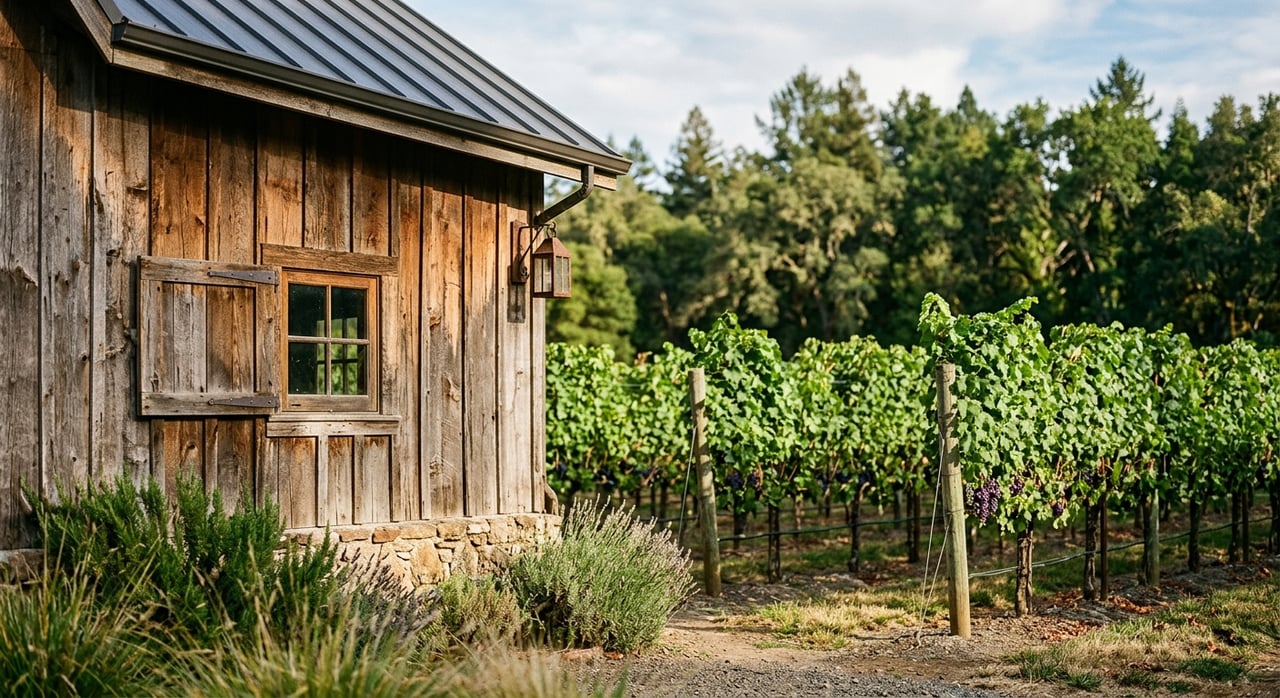
If you are looking at land for vineyard use, start with site quality, not scenery. Virginia Cooperative Extension guidance recommends focusing first on soil depth, internal water drainage, and soil survey maps before you think about row layout or aesthetics.
Detailed soil analysis is especially important before planting. If a parcel has varying topography or different soil classifications, larger sites should be split into separate sampling areas so you can understand what each section can support.
Soil chemistry matters too. Extension guidance notes that Vitis vinifera generally performs best at a pH of 6.0 to 7.0, while American grapes and many hybrids can tolerate pH levels from 5.0 to 6.0.
In Culpeper specifically, the county comprehensive plan identifies a northeast belt of significant agricultural and forestal soils running from Route 15 north of Brandy Station to Lakota on the Rappahannock River. Those soils are closely tied to major stream and river corridors, which is a useful reminder that the best vineyard land often reveals itself through soil, drainage, and topography rather than simple map appeal.
Water should be part of your first review, not your last. The 2022 county farm profile reported only 732 irrigated acres across all farms, which suggests you should not assume irrigation infrastructure is already in place on a parcel.
That makes due diligence around wells, water supply, drought resilience, and potential pond or irrigation improvements especially important. A beautiful open slope may still be a poor operational fit if reliable water is uncertain or expensive to improve.
For many vineyard buyers, the most valuable improvements are practical ones. Access roads, drainage control, open plantable acreage, and a dependable water source often matter more than decorative features.
Culpeper’s land-use framework can also be relevant for vineyard-oriented purchases. The county states that horticultural production is a qualifying farm use under its land-use taxation program, including fruits, nuts, berries, vegetables, florals, and nursery crops.
That may be meaningful if you intend true commercial production and meet the acreage standards. In general, agricultural and horticultural use-value assessment requires 5 acres, or 6 acres if the parcel has a home.
Because tax treatment depends on actual qualifying use, you will want to verify enrollment status and understand what paperwork may be required at transfer. This is one of those details that can affect carrying costs and transaction planning in a very real way.
For horse properties, zoning is one of the first filters. Culpeper County states that keeping horses or livestock is limited to the A-1 and RA districts, although grandfathered situations may exist and some uses in R-1 may require a use permit.
If you are considering a boarding, training, or mixed-use equestrian property, this step comes before barn plans or fencing quotes. A parcel has to fit your intended use at a basic regulatory level.
After zoning, land function becomes the next priority. Many buyers fall in love with a barn or house first, but the pasture system, drainage, and manure-handling potential often determine how well the property will perform over time.
Regional horse-farm guidance offers a practical checklist. It emphasizes vegetated buffers, high ground for heavily used areas, sacrifice areas near the barn, runoff control, and manure storage at least 100 feet from streams or wells.
On smaller acreages, a non-grassed heavy use area or sacrifice area is strongly recommended. It should be well drained and generally have a slope of less than 5%.
Pasture capacity matters as well. Guidance suggests about 0.5 acre per horse for less than 3 hours of grazing per day, 1 acre for 3 to 8 hours, 1.5 acres for 8 to 12 hours, and more than 2 acres for unlimited grazing.
That does not mean every property must fit a perfect formula, but it does mean acreage should be evaluated in relation to your management plan. On many smaller farms, composting may also become necessary because there is not enough pasture area to spread stored waste on site.
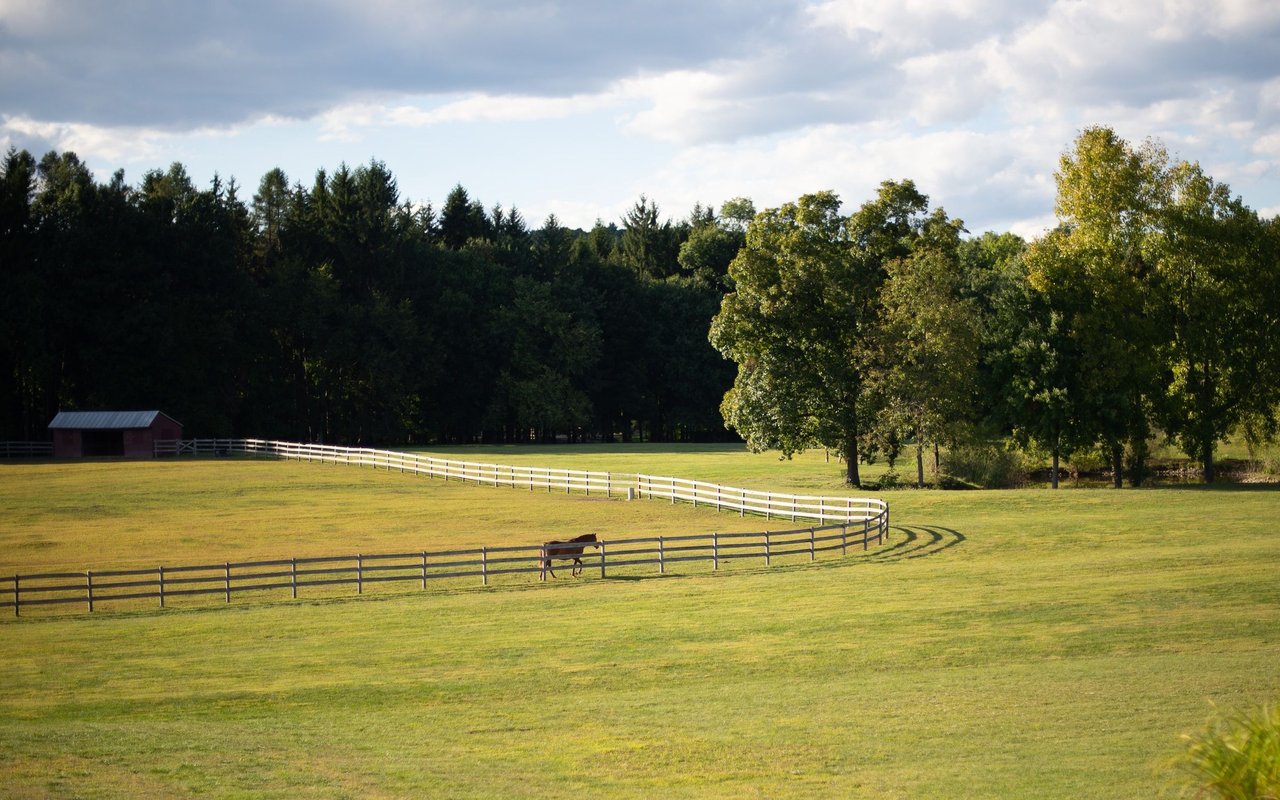
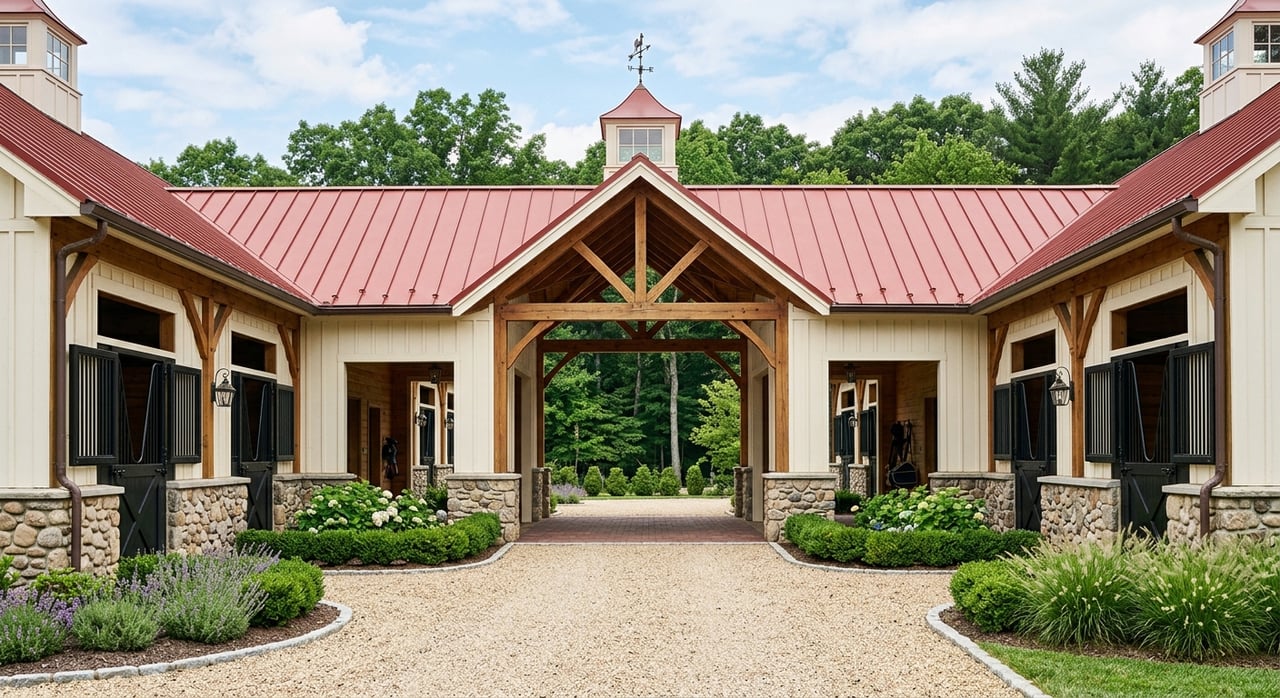
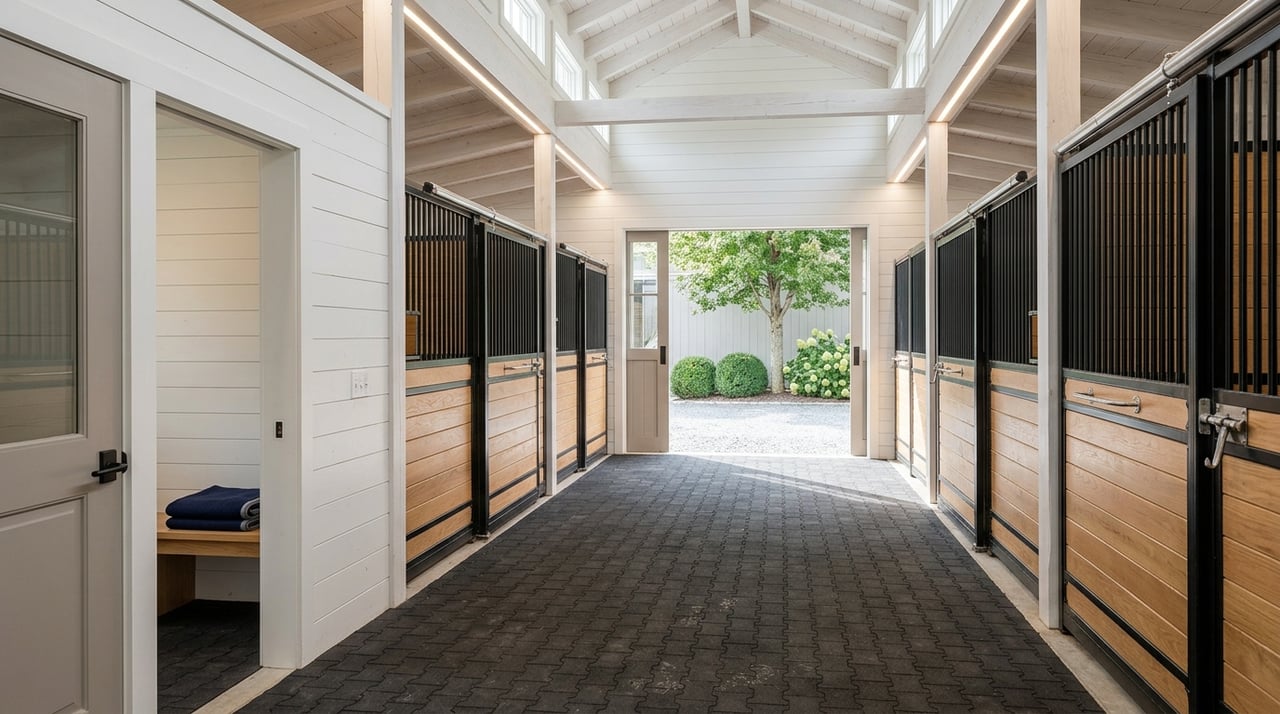
In Culpeper, many rural parcels already include dwellings, which can make the right equestrian setup especially appealing. For many buyers, the most useful profile is a property with a house, barn or stable, fenced paddocks, rotational grazing fields, water points, a sacrifice area, and practical manure-handling space.
Virginia Tech pasture guidance also supports prioritizing productive soils for fencing, fertilizer, and water-source improvements. In plain terms, not every acre will carry equal value to a horse operation, even on the same property.
That is why a thoughtful layout often matters more than total acreage. Twenty workable acres can outperform a much larger tract with weak drainage, awkward topography, or poor infrastructure.
Culpeper has a large amount of land enrolled in its land-use taxation program. County planning data indicate roughly 137,533 acres are currently enrolled, which shows how common this framework is in the local market.
Before closing, confirm whether a parcel is enrolled and whether a transfer application or new application will be needed. The county notes that sales require transfer paperwork, acreage changes may require a new application, and rezoning or a change in use can create rollback-tax exposure.
Site work also needs careful review. County rules generally require a land-disturbance permit for 10,000 square feet or more, though agriculture is treated as an exception, and some watershed areas can trigger permits at 5,000 square feet.
It is also important to remember that county GIS is not survey accurate for property-line setbacks. If your plans depend on exact boundaries, improvements, or building locations, a proper survey matters.
Current trends suggest a few practical lanes for buyers. One likely niche is the 5 to 25 acre parcel suited for a small vineyard startup, especially where soils, topography, and water support horticultural use.
Another is the 25 to 75 acre horse or mixed-estate property with an existing house and usable equine infrastructure. These properties often align with the county’s parcel pattern and may offer a more immediate path to use than raw land.
For larger buyers, 100-plus-acre tracts may appeal for mixed agricultural use, equestrian scale, or conservation-minded ownership. In each case, the opportunity is less about buying the most acreage and more about matching the land to the intended program.
Culpeper can offer real value for vineyard and horse buyers, but this is not a market where broad assumptions work well. Two parcels with similar acreage can differ sharply in zoning, soils, water, tax status, and improvement costs.
That is why local, technical review matters from the start. When you understand how the land actually functions, you are in a much better position to spot upside, avoid avoidable costs, and choose a property that supports your goals for years to come.
If you are considering a vineyard parcel, horse property, or strategic land purchase in Culpeper County, Debbie Meighan can help you evaluate the details that protect value and make a complex rural purchase feel far more manageable.



Debbie's mission is to connect qualified buyers and motivated sellers to cement the best real estate transactions, deals where both sides come together for a common goal, and everyone feels like they have walked away a winner.