Clarke County Weekend Farm: From Retreat to Working Farm
March 24, 2026
March 24, 2026
Thinking about turning your weekend retreat into a productive farm in Clarke County? You are not alone. With the right plan, you can add real utility, protect the land, and preserve resale value without overbuilding. This guide walks you through local permits, smart barn and pasture design, utilities, budgets, and a clear step-by-step path. Let’s dive in.
Clarke County treats many farm structures differently than typical accessory buildings. The County offers an agricultural building exemption, but it is a two-step process. First, you request an agriculture-exemption determination with the Building Official. Second, you still obtain a zoning permit with a simple site sketch from Planning. The County’s Guidance Manual explains eligibility, paperwork, and common triggers. Review the county’s agricultural procedures in the Guidance Manual and confirm details with Planning and the Building Department before you budget improvements. You can find forms on the Planning & Zoning page and reach the Zoning Administrator, Jeremy Camp, for a pre-application check.
Even when a barn qualifies as ag-exempt, most electrical, plumbing, and mechanical work still requires separate permits and inspections. Check setbacks, septic protection zones, and any utility connections early so your layout fits County expectations.
For details, see the county’s agricultural building guidance in the Clarke County Guidance Manual and the Planning & Zoning forms and fees.
If you need a new private well or onsite sewage system, permits run through the Virginia Department of Health and the Lord Fairfax Health District. Clarke County also has a local septic ordinance and a Board of Septic & Well Appeals, so requirements can be stricter than state minimums. Secure well and septic permits before you apply for building permits or lock in your barn location. Start with VDH’s permitting guide and review Clarke County’s Chapter 143 septic rules to avoid surprises.
Much of Clarke County has karst geology. On some projects the County may require soils and resistivity review before grading arenas or siting septic. If you are near steep slopes, visible sinkholes, or thin soils over rock, plan for testing. A quick pre-application meeting with Planning can confirm whether the County’s Resistivity Review applies to your site.
Start with function, not finishes. List what you need the barn to do in the next 5 to 10 years. Then size and phase improvements accordingly.
Clarke County’s allowances make it possible to build agricultural structures, but resale rarely recovers luxury, highly customized features if local demand is modest. If you plan lessons, boarding, or farm events, those activities can trigger agribusiness or agritourism rules and additional approvals. Confirm where your plan sits within County definitions using the Clarke County Guidance Manual.
Keep in mind: even an ag-exempt barn is still subject to setbacks, septic and well protection, and utility rules. If you introduce human living space, the building typically loses agricultural exemption status and will be reviewed like a standard structure.
For horses, standard box stalls are commonly in the 10-by-10 to 12-by-12 foot range depending on size and use. Three-sided run-in sheds often work well for turnout and can be planned around 90 to 150 square feet per animal for occasional shelter. Place high-use areas like foaling or isolation stalls near water and power. Design aisles for safe movement and use ridge and eave openings for natural ventilation. Avoid storing hay directly above active stalls to reduce fire risk and improve airflow.
Healthy pastures start with rotation. Use a combination of larger rotational fields for grazing and smaller sacrifice paddocks near the barn for wet weather or rest periods. Virginia Cooperative Extension recommends designing a rotational system so fields can recover between grazings. Done well, you reduce fertilizer needs and extend your grazing season. Explore rotational design in VCE’s guide SPES-707 on pasture infrastructure.
A common rule of thumb for pleasure horses is 2 to 3 acres per horse for long-term pasture health. You can operate on less acreage with more intensive management, dedicated dry lots, and supplemental feeding. For commercial boarding, you will want to calculate acres per animal based on forage yield, desired grazing days, and utilization. For a Virginia-focused overview, see the guide to maintaining healthy horse pastures.
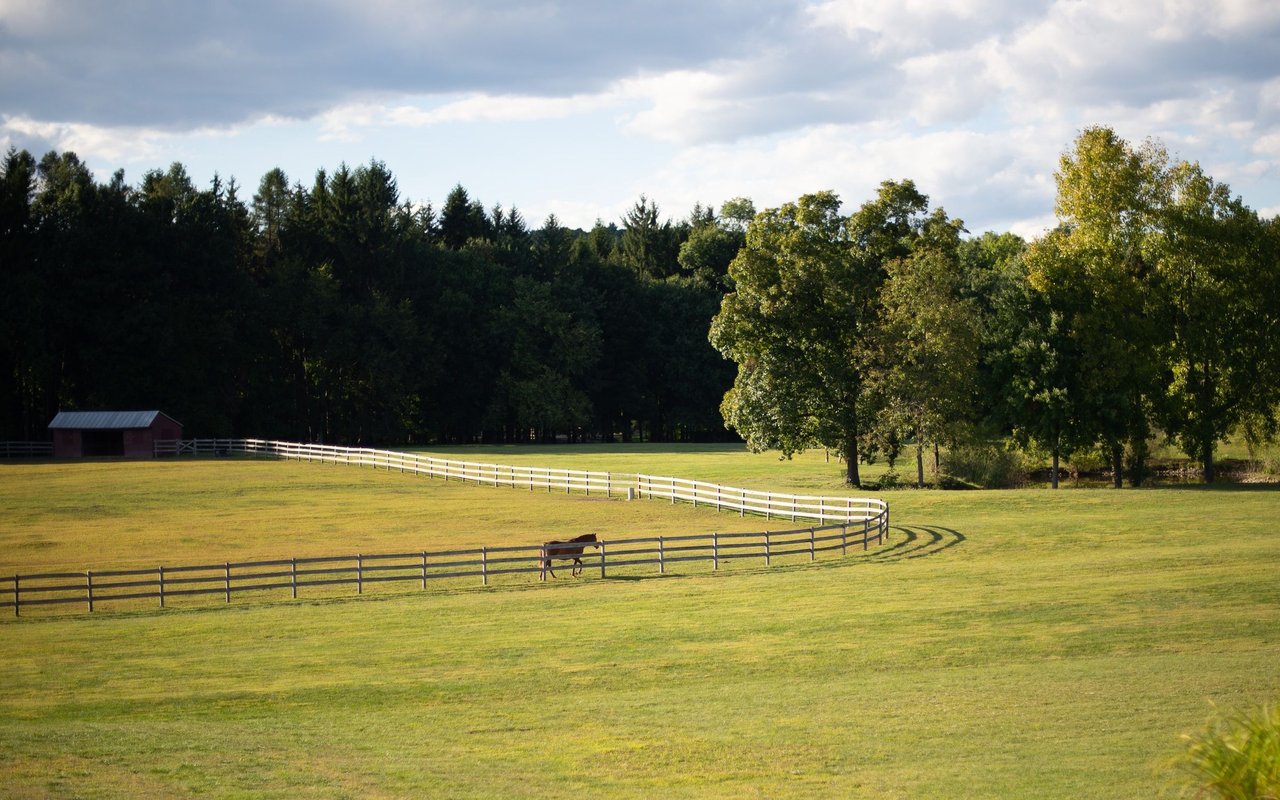
For fencing, focus on visibility and species-appropriate strength. For horses, common choices include board fence, post-and-rail, or high-tensile systems with visibility tape. Aim for a height of about 4 to 5 feet and avoid barbed wire for equines. For cattle or small ruminants, consider woven wire or appropriately electrified systems. Penn State Extension’s fence planning for horses offers a clear overview of pros and cons by material.
To control mud and protect roots, design sacrifice paddocks and high-traffic areas with a compacted base, drainage, and access for muck removal. Add heavy-use pads by gates, waterers, and barn doors. These small projects often deliver the biggest day-to-day improvements.
Budget fencing with wide ranges in mind. Terrain, gates, and materials drive costs. For early planning, see this overview of wire fence cost ranges and always secure multiple local quotes before committing.
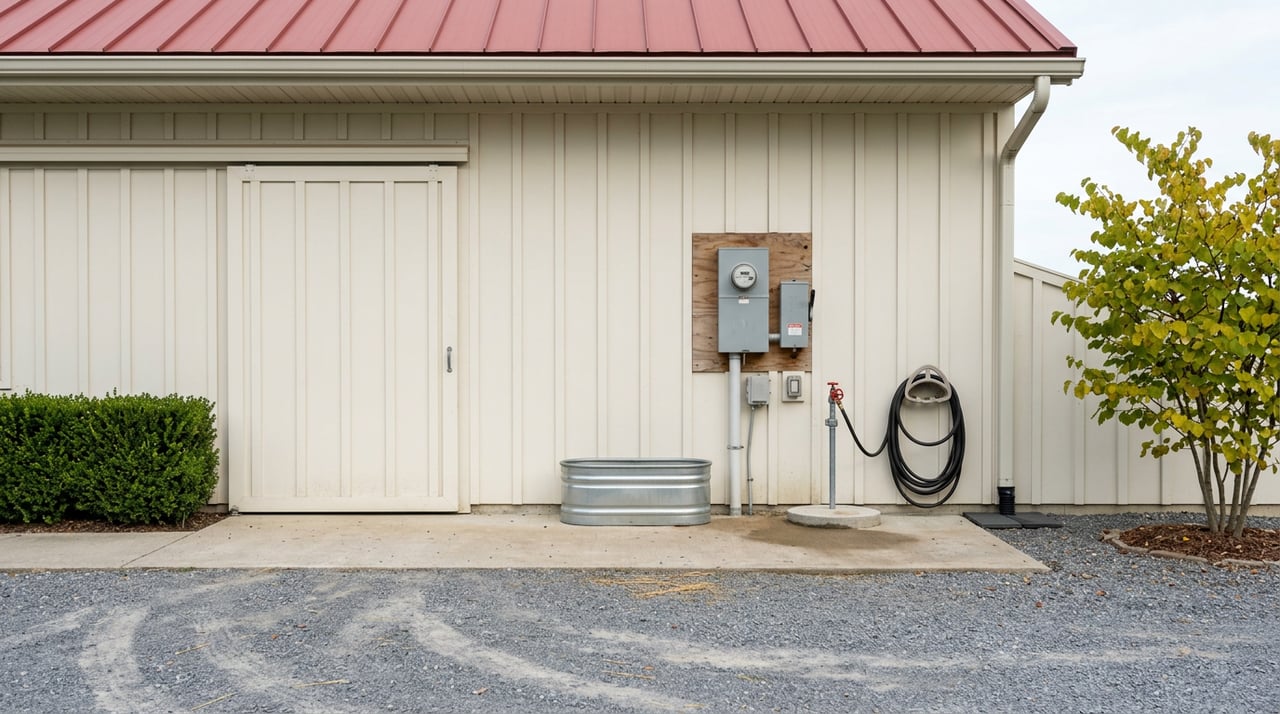
If you are drilling a new well, plan for permits, possible testing, and lead times. VDH outlines the process in its application guide. Budget is highly site-specific, especially in rocky or fractured geology. Ask local drillers and neighbors about typical depths in your area, and request two to three bids to refine your numbers. For early budgeting insight, see this general well budget guide, then align assumptions with local quotes. Install frost-free hydrants or automatic waterers where you need year-round access and size your pump for multiple troughs if necessary.
Plan for separate permits and licensed contractors for electrical, plumbing, and any mechanical systems. If your project needs more electrical capacity or a new transformer, contact the utility early for lead times and potential line extension costs. Build schedules around inspection milestones so you can phase work without redoing finished areas.
Any new wastewater generation, such as a wash stall or a restroom, will trigger a septic review with VDH and under Clarke County’s Chapter 143 rules. If you anticipate significant manure generation or regular land application, Virginia’s Department of Conservation and Recreation may require a Nutrient Management Plan prepared or approved by a DCR-certified planner. This is especially relevant for poultry litter or larger, repeated applications. Review DCR’s program details and use your local Soil & Water Conservation District to scope options that fit your operation.
Beyond compliance, consider NRCS and your Soil & Water Conservation District for technical help and potential cost-share on stream exclusion, heavy-use pads, manure storage, and rotational grazing upgrades. These programs can reduce out-of-pocket costs while improving soil health and water quality.
Build to your intended use and to Clarke County market expectations. Functional, well-drained paddocks, reliable water, and tidy storage almost always beat costly custom finishes when it comes to resale. If you are considering boarding, lessons, or events, use the County’s agribusiness and agritourism guidance to confirm feasibility, including parking, traffic, and wastewater implications. Capture early wins with fencing, a sacrifice area, and water access, then pause to reassess before major structural investments.
Ready to talk through your plan, zoning path, and market fit for Clarke County? Schedule a confidential consultation with Debbie Meighan to align improvements with your goals and long-term value.



Debbie's mission is to connect qualified buyers and motivated sellers to cement the best real estate transactions, deals where both sides come together for a common goal, and everyone feels like they have walked away a winner.